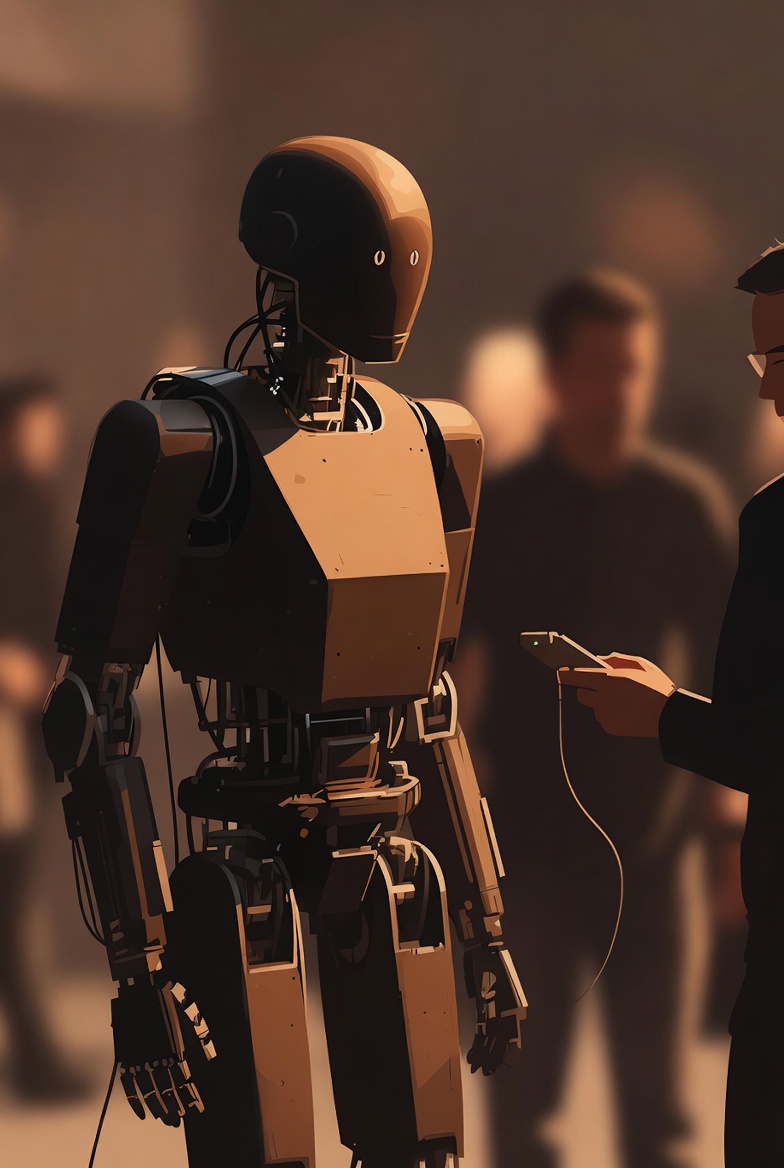
Ai Lin didn’t set out to build a robotics company. He watched humanoid robots dance across the stage at last year’s Spring Festival Gala, spent $30,000 on his first android, and started renting it out — $443 a day, for weddings, exhibitions, anything that needed a crowd. Business has been brisk. Multiply Ai Lin by roughly 153,000, which is the number of robot rental businesses now operating in China, and you have a genuine industry.
It is also, if you look at what’s actually being rented, an admission.
“The market for humanoid sales hasn’t really taken off yet because today’s robots still can’t operate on their own – they’re basically oversized toys,” Ai Lin told CNN. That’s not a competitor talking the technology down. That’s the guy whose income depends on it, explaining why he’s in the rental business and not the sales business.
The mechanics make the point better than the quote does. AGIBOT’s rental arm, SHAREBOT, doesn’t just hand over a robot for the day — the day rate includes a human operator who controls and programs the machine on-site. Rent a humanoid in China right now and you’re not renting autonomy. You’re renting a robot and its chaperone.
That’s the buried lead. A product that ships with a required human minder isn’t a labour-replacement technology yet — it’s a labour-augmentation one, and the augmentation is doing most of the work. SHAREBOT logged more than 5,500 orders in its first three months and is projecting a $1.5 billion rental market by the end of 2026. None of that growth requires a robot that can operate unsupervised. It requires a robot that looks impressive for an afternoon while someone off-camera runs it.
The production numbers back this up from the other direction. Even Unitree — the world’s largest humanoid maker, headed for a Shanghai listing this year — sells mostly to research and education buyers; industrial deployment is under 10% of its business. UBTECH’s most advanced models top out around 80% of human productivity, and only on narrow, repetitive tasks like box-stacking. Walk a short distance from any viral robot showcase in China and you’ll find a training facility instead: rows of humanoids repeating single tasks under a human handler’s controller, because the models still don’t have enough physical-world data to generalise past what they’ve been drilled on.
China’s manufacturing lead in this category is not in question — Chinese makers built roughly 90% of the world’s humanoid robots last year, and the gap with the US is not closing. But manufacturing lead and deployment readiness are different claims, and the rental market is the clearest evidence yet of which one China has actually solved. It has solved building the robot. It has not solved letting the robot work alone.
Two things are true at once. China’s robot rental boom looks, from a distance, like a country several steps ahead in commercializing humanoid labour. Look closer and the same boom is the industry quietly admitting the robots aren’t ready to be sold outright — only to be leased out, minder included, for exactly as long as someone needs a novelty.