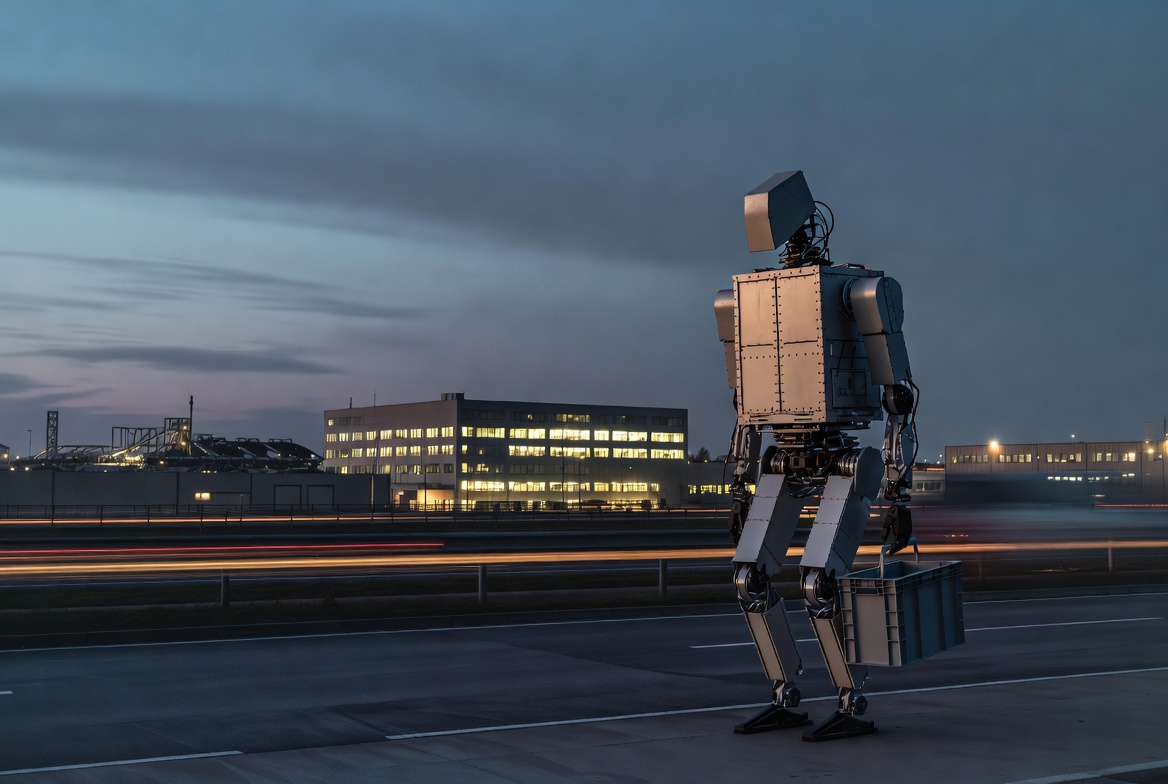
Tesla has 1,000 robots and zero customers. Agility has one robot and thirty. Guess which one just moved in next door.
Agility Robotics is opening a 60,000-square-foot facility in Fremont, California to train its Digit humanoid — just up the highway from the plant where Tesla starts Optimus production this year. The location is not an accident. It is a positioning statement.
The contrast underneath the geography is the actual story. Tesla has deployed more than 1,000 Optimus units, but every one of them is internal. No external paying customers. Musk’s own framing is that Optimus becomes useful outside Tesla “sometime next year.” Agility doesn’t have Tesla’s capital, but Digit is already generating revenue — carrying totes and bins in warehouses and factories for Amazon, GXO, Schaeffler and Toyota Motor Manufacturing Canada. The company says more than 30 customers are in talks about deployment.
The new facility is where the six-foot robot learns skills in environments matching those it will meet in the field. That is the tell. Agility is investing in real-world task generalisation on hardware that already earns its keep, while Tesla is still converting a car line.
One more detail worth holding onto: Agility isn’t planning in-home humanoids anytime soon. That view — that today’s robots aren’t safe enough for consumer settings — is shared by most independent robotics experts. It is a quiet rebuke to the consumer-humanoid hype cycle, delivered by the company with the most robots actually working for money.
The incumbent has the promise. The challenger has the invoice. And now it has the address too.