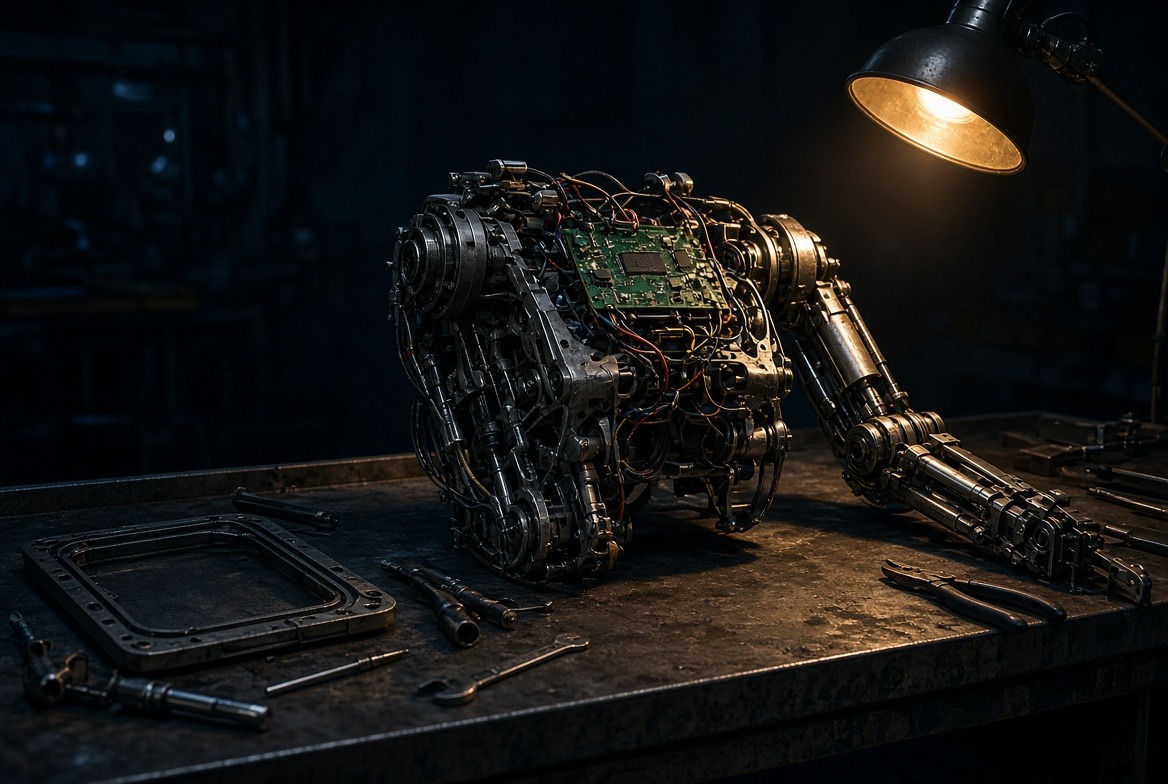
On 28 July 2026 the FCC added Chinese-made humanoid and quadruped robots to its Covered List, citing two confirmed vulnerability sets rather than a hypothetical one: a remote-code-execution flaw in the firmware of Unitree’s older Go1 quadruped, and, separately, a wormable Bluetooth exploit researchers named UniPwn — hardcoded keys and unsanitised command injection that hand an attacker root access on Unitree’s current-generation Go2, G1, H1 and B2 robots, with the additional property that an infected robot can compromise others in Bluetooth range on its own. Unitree told the researchers in July 2025 that a proper fix would take “quarters or years.” Neither issue had a public patch by the time new units stopped clearing US customs.
RoboStore had built its entire business on those same robots. As Unitree’s official North American partner it had sold more than 1,500 units to roughly 4,500 customers — Harvard, MIT, Amazon, Nvidia and Cisco among them — the kind of client list that makes “just switch suppliers” sound simple until you notice how much of the market actually ran through one distributor. Two weeks after the ban took effect, RoboStore announced it wasn’t leaving the business. It was launching a subsidiary, Robo Inc., to build a 66,000-square-foot integration facility on Long Island, opening in January 2027: source hardware wherever the paperwork still allows it, then do the assembly, software rework, security hardening and testing on US soil before anything reaches a customer.
That’s a narrower promise than “American-made,” and worth being precise about the difference. It isn’t reshoring manufacturing; it’s reshoring the last, most sensitive step — the part where a robot with root-level wireless access to a hospital corridor or a defence contractor’s floor either does or doesn’t come with a hardened, audited firmware image. Founder Teddy Haggerty’s line about customers wanting “solutions that can be deployed now, built around a specific job and supported over time” is a sales pitch, but it’s also an honest description of the gap being filled: the alternative to buying Chinese hardware was never really buying American hardware, because American hardware costs roughly twenty times as much.
That number is the part a straightforward national-security case skips past. A Chinese humanoid starts around $13,500. Agility Robotics’ Digit, built domestically, starts past $250,000. One analyst estimate for what it would cost to build a comparable robot with the Chinese components — mainly the actuators — swapped out: not double, not fifty percent more, but very nearly triple the bill of materials. Banning the cheap option on security grounds doesn’t make the expensive option affordable; it just turns the gap between them into someone’s business plan. RoboStore’s bet is that most of its customers were never choosing cheap-Chinese over expensive-American so much as affordable-robot over no-robot at all — and that a hardened, warrantied version of the affordable one, assembled somewhere the FCC can actually inspect it, is a product that didn’t exist a year ago and may now be the only legal one on the table.
Whether that product closes the security gap it’s selling against is the part nobody outside RoboStore can currently check. “Hardened” and “tested” are marketing words until a customer’s own IT department gets to look underneath them, and the backdoor that helped trigger this ban sat unpatched in commercial use for the better part of a year before anyone outside a security researcher’s lab noticed. A distributor that spent that year selling the robots it now says needed fixing is not, on its own word, a company anyone should simply take at its word.
Two truths, one distributor: the vulnerabilities behind the ban were real, confirmed and unpatched — and the ban’s economics were never going to produce an American-made robot at the old price, only an American-hardened version of the same one.