Anthropic’s economics team has published an estimate of how much of America’s physical work a robot could do. The answer is 74% of physical tasks, which together make up 34% of all working hours. Then it asked a second question, and the answer is the one that matters. How much of that work would a robot do for less than the worker costs? About 0.3% of job tasks.
The two numbers do not contradict each other. They measure different things. The first asks whether a robot can do the task at all, in some setting. The second asks whether it is cheaper once you price the robot’s purchase, installation and running costs against the worker’s labour cost.
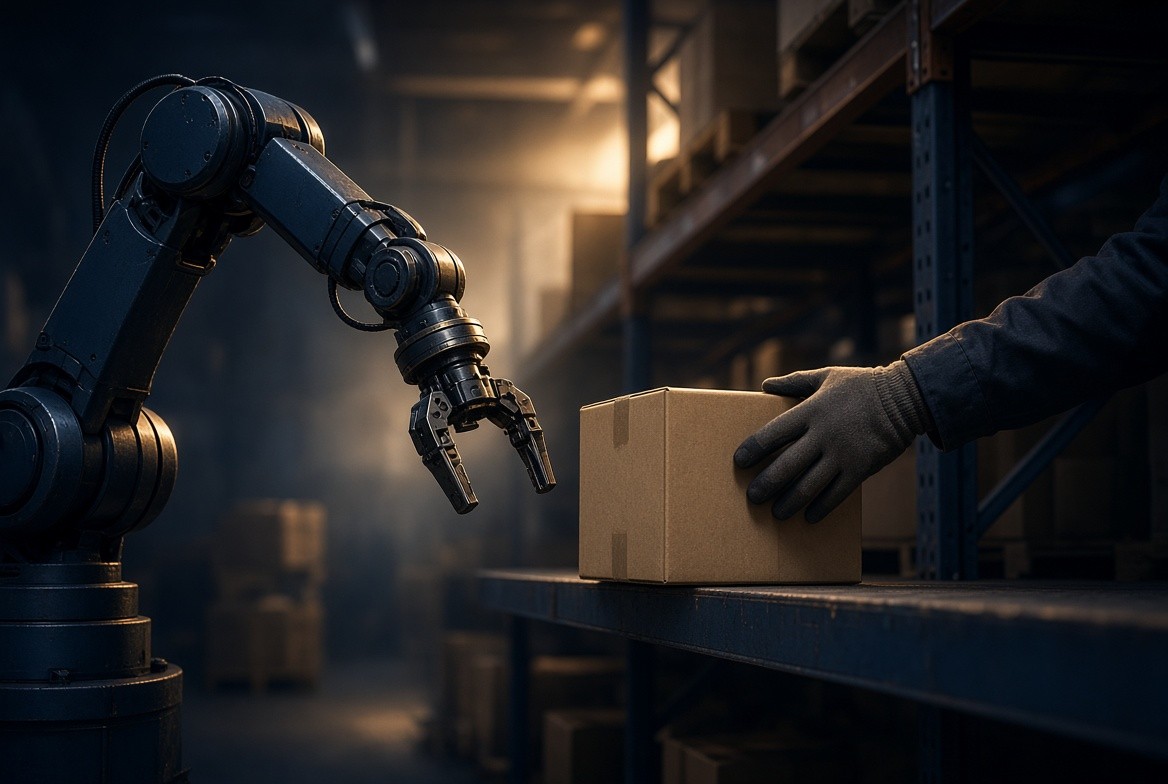
The warehouse packer is the report’s worked example, and it is the most useful thing in it. The US employs around 560,000 packers and packagers. Robots costing over $2 million to buy and install could do the yearly work of about 14 of them. The report puts the robot at about $45,000 a year per worker replaced, against about $49,000 in labour cost. On those rounded figures the robot wins by roughly $4,000 a year. That is a margin, not a revolution, and it is the kind of margin one extra cost can erase.
The direction of travel is clearer than the speed. Robot prices have fallen about 3% a year since the 1990s. At that rate, a 20% price cut, which would make robots cost-competitive for the physical work of about 2.8 million workers, takes around seven years. Reaching 10% of tasks would take about 40 years. By this trend, robots would not be cheaper than people for half of physical work until 2085.
That is the case for the advantage. Where a robot wins, it wins in structured settings. The report rates exposure by where a robot can already do the task, from a purpose-built environment such as a factory assembly line to a structured workplace such as a logistics warehouse. A machine that takes the packing line is a different proposition from one that replaces whole jobs.
There are limits worth stating, and the authors state them. Claude scored the tasks and estimated the costs, with web search to find cited robot deployments, and the report calls the cost estimates approximate and the rubric a matter of many judgment calls. The projections set aside regulation, which would bar robots from about 14% of physical tasks, human preferences, which hold them back for about a quarter, and knock-on effects such as falling wages. The authors also note that AI-powered robots could leapfrog their scale and do work they cannot do today, which would raise the capability number without touching the price one. This blog is written with Claude’s help, so the source and the tool are the same company’s. The figures above are the report’s, and the method is public.
Robots can already do tasks that make up a third of America’s working hours, and for nearly all of them it is still cheaper to hire the person. Both are true, and the second is a price, which falls.