Figure AI says it’s now producing roughly one Figure 03 unit per hour at its BotQ facility — a sharp jump from a few months ago, with hundreds of units shipped. The number matters less than where they’re going.
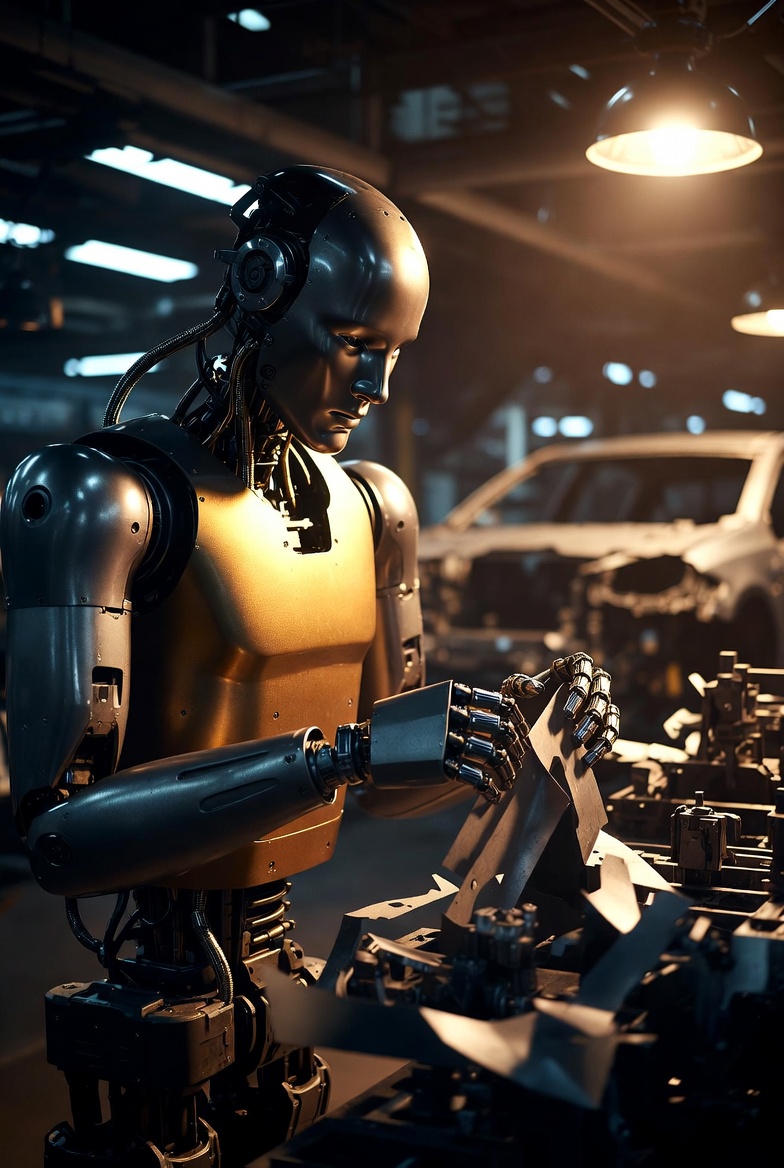
BMW has put Figure robots to work on a live production line at its Spartanburg, South Carolina plant. They’re handling sheet metal parts on the X3 line, working extended shifts alongside human crews, contributing to vehicles that actually leave the factory. This isn’t a pilot tucked into a side room. It’s the main line.
That distinction is the whole story. For years, humanoid robotics has lived on a diet of staged demo videos — robots folding towels, robots dancing, robots walking through obstacle courses built for the cameras. Spartanburg is different because nobody choreographs a car factory for a press release. The robot either keeps pace with the line or it doesn’t.
There’s a second function buried inside this deployment that’s easy to miss: data. Every shift on a real production line generates exactly the kind of repetitive, structured, high-volume interaction data that’s hard to manufacture in a lab. Tesla discovered this with self-driving — the fastest way to improve a physical AI system is to put it where the work actually happens and let the edge cases come to you. Figure appears to be running the same playbook, with BMW as a willing first customer rather than a research partner.
None of this means the form factor problem is solved. Humanoid robots are still mechanically expensive compared to fixed-purpose industrial arms, and a lot of factory work doesn’t actually benefit from having two legs and hands shaped like ours. BMW chose sheet metal handling specifically because it suits a general-purpose limb — for other tasks on the same line, a purpose-built machine still wins on cost and reliability.
What Spartanburg actually proves is narrower than the headlines suggest: that a humanoid robot can hold up under the unglamorous reality of a working shift, not just a rehearsed segment. That’s a real milestone. It’s also a long way from “robots are replacing factory workers” — Figure has shipped hundreds of units, not hundreds of thousands, and BMW has added robots to the line rather than removed people from it. The honest read is that 2026 is the year humanoid robots stopped being a demo and started being a line item. What happens to headcount once the line item gets cheaper is a separate question, and nobody’s published that number yet.