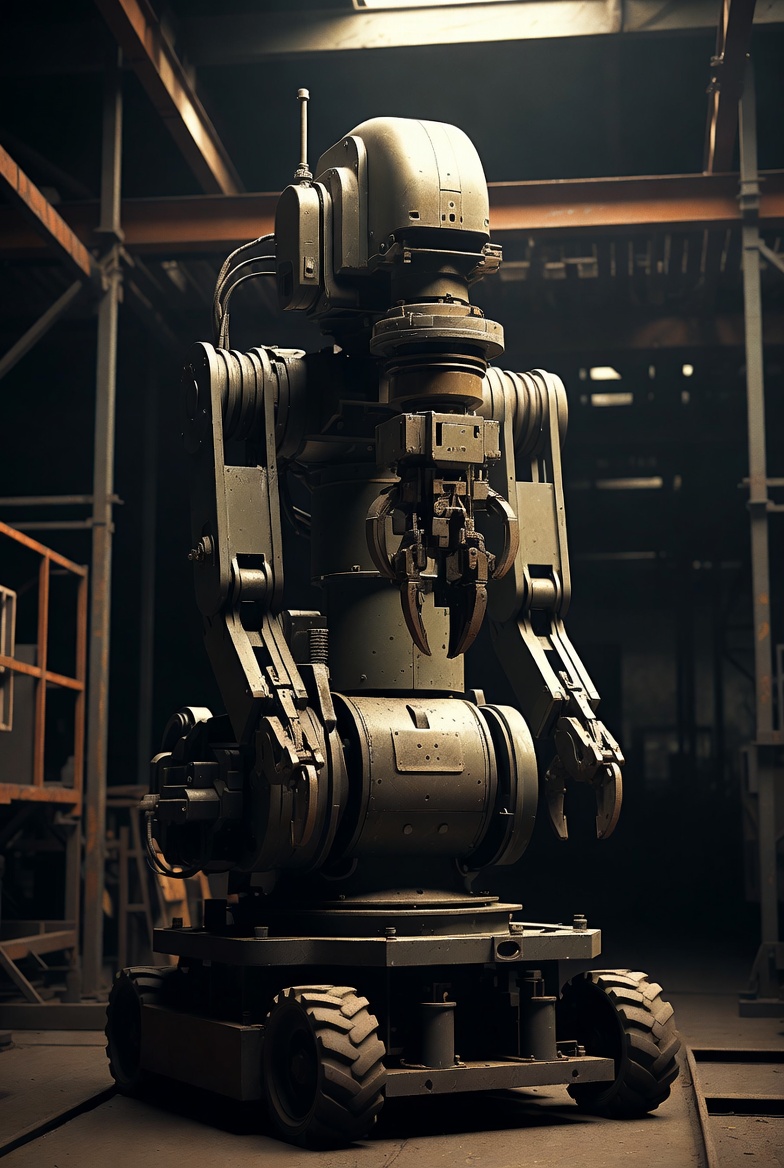
Genesis AI, a Paris-and-Palo-Alto startup, unveiled its first robot on June 16. The most notable thing about Eno is what it doesn’t have: legs. It runs on a wheeled base with a foldable tower body and two arms ending in hands the company says match human proportions, with 22 degrees of freedom in each. The $105 million seed round backing it is one of France’s largest, co-led by Eclipse Ventures and Khosla Ventures, with Eric Schmidt, French billionaire Xavier Niel, MIT robotics professor Daniela Rus, and former Intel Labs head Vladlen Koltun all writing checks.
That funding list arrives at a strange moment for the sector. Figure AI is deploying bipedal humanoids in a Catalyst Brands warehouse at a $39 billion valuation. Xpeng’s CEO just took personal control of its robotics unit to push the IRON humanoid into mass production. NEURA Robotics closed a $1.4 billion round two weeks ago. Nearly every well-funded company in this space is racing to build something that walks like a person. Genesis looked at that race and built a robot on wheels instead. Eclipse partner Charly Mwangi put the underlying logic plainly: even in the most automated industries today, the robot-to-human ratio rarely exceeds 1:30. The bottleneck isn’t bipedal mobility. It’s dexterity and judgment doing real tasks, and legs are an expensive way to fail at both while you work on it.
It’s worth being precise about what’s actually been demonstrated versus promised. Genesis has built dozens of Eno units and run them through lab and warehouse tasks; it hasn’t shipped a fleet. The company’s GENE foundation model is the real bet here — the hardware is comparatively conventional, and wheeled mobile manipulators have existed in industrial automation for decades. What Genesis is selling is the combination: a capable foundation model paired with human-grade hands, on a chassis that doesn’t have to solve bipedal balance before it can pick anything up. Production scale-up is slated for the second half of 2026, starting with logistics and manufacturing customers, before any hospitality, healthcare, or consumer deployment is even attempted.
So is rejecting the humanoid form an actual engineering insight, or a differentiation strategy for a startup that needed a way to stand out in an overcrowded, overfunded field? Probably some of both, and that’s not really an insult — a credentialed team (CEO Zhou Xian holds a robotics PhD from Carnegie Mellon) making a narrower, more modest claim than “general-purpose humanoid will do everything” is, if anything, a healthier instinct than the rest of the sector’s. It’s also an easier claim to walk back quietly if it doesn’t pan out.
The mundane story is that robotics keeps absorbing capital faster than it produces deployed robots, and $105 million is one more data point in a year already full of them. The more interesting story is that a serious, well-credentialed team looked at the industry’s dominant aesthetic and bet against it — on wheels, not legs, as the thing that actually gets work done. Whether that’s the sober choice or just a different flavor of hype won’t be answered by Tuesday’s unveiling. It’ll be answered by whether Eno is still doing real warehouse work in eighteen months, the same test every other humanoid promise on this list is quietly failing or passing right now.