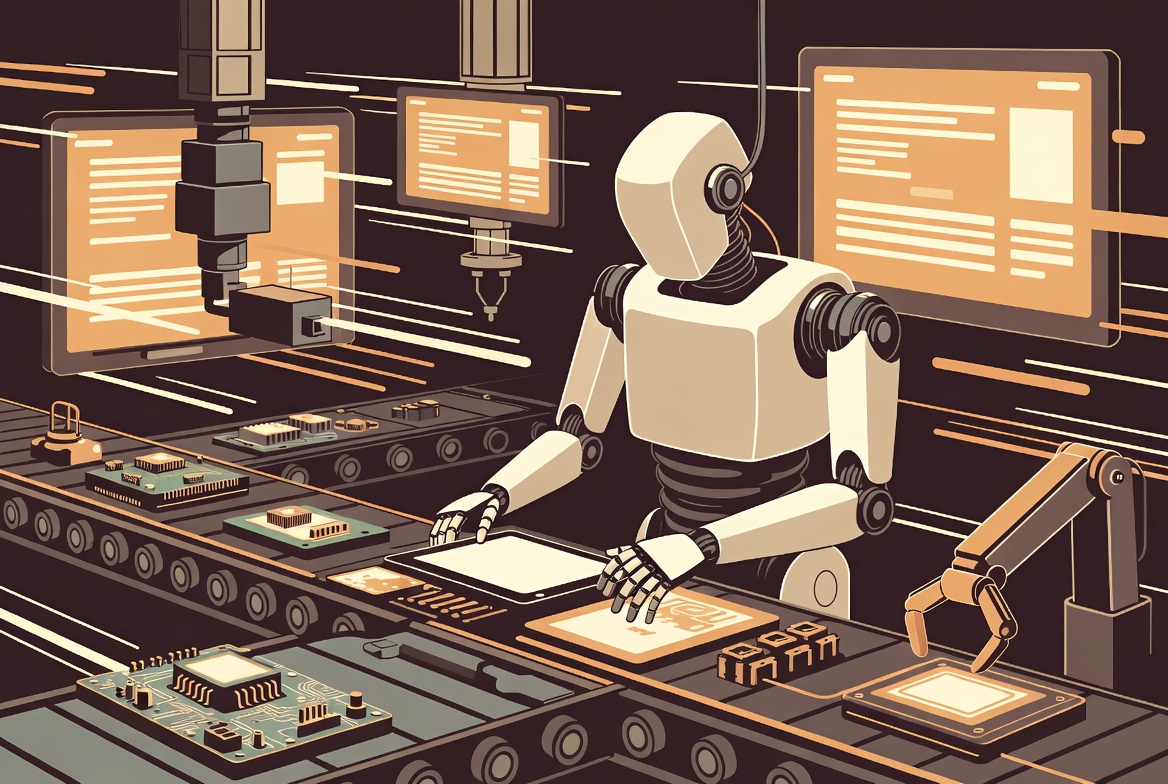
AGIBOT spent six days proving a point. The Chinese robotics firm ran a continuous livestream from Longcheer Technology’s electronics factory in Nanchang, putting multiple G2 humanoid robots to work on an active tablet manufacturing line alongside human staff and live equipment — not a demo rig built for the cameras.
The numbers, as reported: over 64 hours of operation, 64,828 production-line tasks completed across four-plus workflows, a 99.99% task success rate, and 17,625 tablet units produced. The G2s handled quality inspection, defect sorting and material transport, adapting to shifting tasks under normal factory conditions throughout.
AGIBOT timed the stream to coincide with a separate milestone: its 15,000th robot rolling off the line, delivered to the same Longcheer facility. The company says its production curve is steepening fast — a year to go from 1,000 to 5,000 units, then just three months to get from 5,000 to 10,000. AGIBOT also claims the largest share of global humanoid shipments, at 39%, though that figure comes from the company’s own reporting rather than independent industry data.
Two things are genuinely notable here. First, the choice of venue: a live, continuously broadcast mass-production line is a much harder claim to fake than a curated showroom reel, and AGIBOT clearly wants that distinction noticed — Figure AI ran a similar play in May, streaming Figure 03 for 200 hours on a packaging line. Second, the production numbers, if accurate, describe a manufacturing ramp that’s compounding rather than linear, which is the harder thing to fake at scale.
What’s less clear is what “99.99% success” is actually measuring — task completion against AGIBOT’s own definitions, not an independently audited benchmark. A live stream demonstrates uptime and consistency in a way a press release can’t. It doesn’t, on its own, tell you how the G2 compares on cost, payload or task complexity against the rest of the field racing into the same factories.