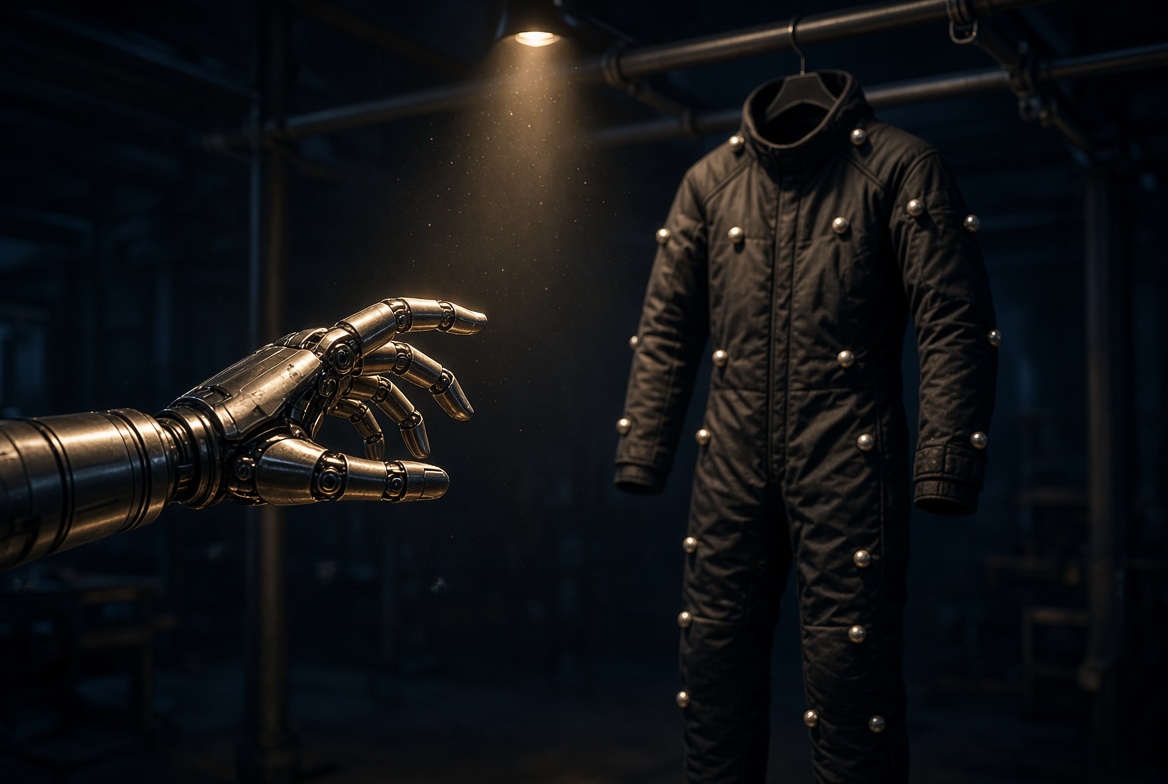
For a while, the way Tesla taught Optimus to move like a person was to put a person in a motion-capture suit and have them do the job first. Factory workers at Tesla’s Texas and California plants were asked to wear the rigs and perform ordinary tasks — reaching, gripping, walking a line — so the robot could learn from the recording. According to The Information, a number of them declined, for a reason that doesn’t require much unpacking: they knew what the robot was for.
Tesla’s answer wasn’t to make the case to those workers. It was to stop asking them. Data collection moved to dedicated teams and purpose-built training hubs — teams assigned specifically to generate the movements Optimus needs, rather than line workers pulled off their own jobs to hand over the raw material for automating them. The company gets its training data either way. It just no longer has to ask the people closest to the outcome to help build it.
The robot they’re building still needs the help. Optimus’s hands — more than 100 small components apiece — are assembled by hand, because the fine motor work of putting together fine motor work hasn’t itself been automated yet. The touch sensors meant to give those hands feedback have been unreliable enough that Tesla is now shipping a swappable glove-like sensor layer as a workaround rather than a fix. Assembly-line equipment struggles to align the components precisely at the speed Tesla wants, and some robots come off the line needing immediate repairs before they can do anything at all. Output is currently in the hundreds of units a week. Tesla’s stated target, per one report, is over 1,000 a week by the end of the year — a target that assumes all of the above gets solved in the next three months, on a line that is also, per the same report, still leaning on Chinese suppliers for components even as the political pressure to reshore that supply chain builds.
None of this is a story about a company quietly winning. It’s a story about a company that hit a very ordinary kind of resistance — people asked to help build the thing that replaces them, declining — and treated it as a staffing problem to route around rather than an objection to sit with. The hands still don’t fully work. The line still can’t hit its own numbers. But the part of the plan that depended on willing cooperation from the workforce being displaced got solved first, and cleanly: assign people who will, and let the ones who won’t watch it happen anyway.
Two truths: the technical case for Optimus is still, on the available evidence, unfinished — a robot whose hands need help getting made can’t yet do much unsupervised. And the human case against it isn’t a prediction anymore. Workers were shown, directly, what the job was, and some said no. The company kept going.