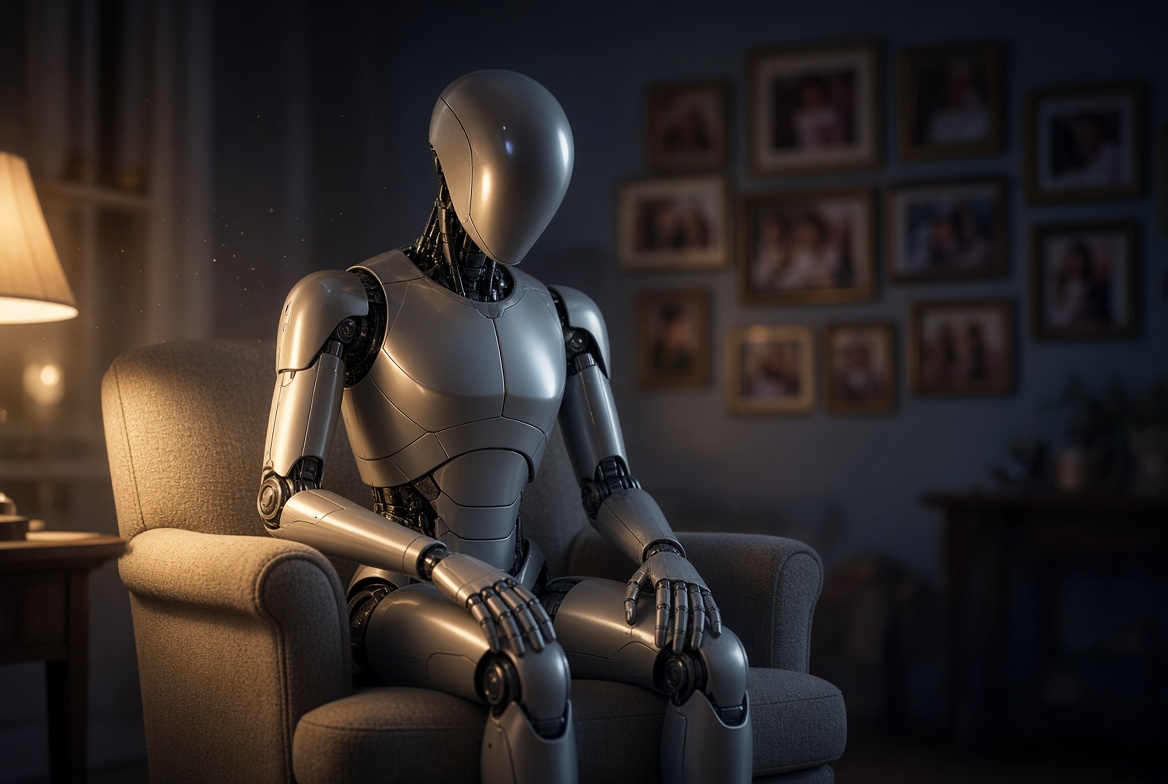
On 16 September, UBTECH began delivering the UWORLD U1 to homes across China — the first full-size, mass-produced humanoid robot sold explicitly as a companion rather than a labourer. Buyers who pre-ordered in June, when the company opened sales at 119,800 yuan (roughly $16,500) for the entry-level Lite model, started receiving robots on the schedule UBTECH had publicly committed to back in August. More than 13,000 orders were logged by the June launch alone. Whatever else the U1 turns out to be, it shipped, on time, to real addresses — which is more than several higher-profile humanoid programmes can currently claim.
What it does once it arrives is narrower than the launch numbers suggest. UBTECH quotes 88 degrees of freedom and claims the U1 replicates roughly 90 percent of basic human movement, recognises more than twenty emotional states at better than 90 percent accuracy, and responds within half a second. What it does not do: climb stairs, cross uneven flooring, cook, or clean. UBTECH has been candid about that trade-off from the start — one Beijing buyer told the South China Morning Post before delivery that the appeal was never the housework, and that “the happiest part is often the waiting.” The company built a companion and is selling it as one, at a price — U1 Pro runs about $23,680 — that puts it well outside novelty-purchase territory.
The detail worth sitting with is the face. UBTECH’s “three-layer privacy architecture” includes 3D facial reconstruction and voiceprint-based identity replication, pitched as building deeper emotional rapport — which in practice means the robot can be configured to look and sound like a specific person. UBTECH’s own marketing frames this around isolation: the company has pledged 100 free units to elderly people living alone, children without parents, and families in hardship. It has not, in anything this publication could find, addressed the more obvious implication of the same feature — a machine that can be built to wear the likeness of someone who is no longer alive to consent to it.
None of this is unique to UBTECH. Humanoid makers everywhere are hunting for a market beyond factory floors, and “companion” is the most obvious one going. What UBTECH has actually done differently is ship the product first and let the questions about it arrive afterward, which is its own kind of answer.
Two truths: a mass-produced, full-size humanoid robot really did arrive at real Chinese homes this month, on schedule, to real paying customers — that part is not hype. And the feature getting the least scrutiny — a machine that can be built to wear a specific person’s face and voice, living or dead — shipped right alongside it, with no framework attached beyond a press release’s warm language about seamless interaction.