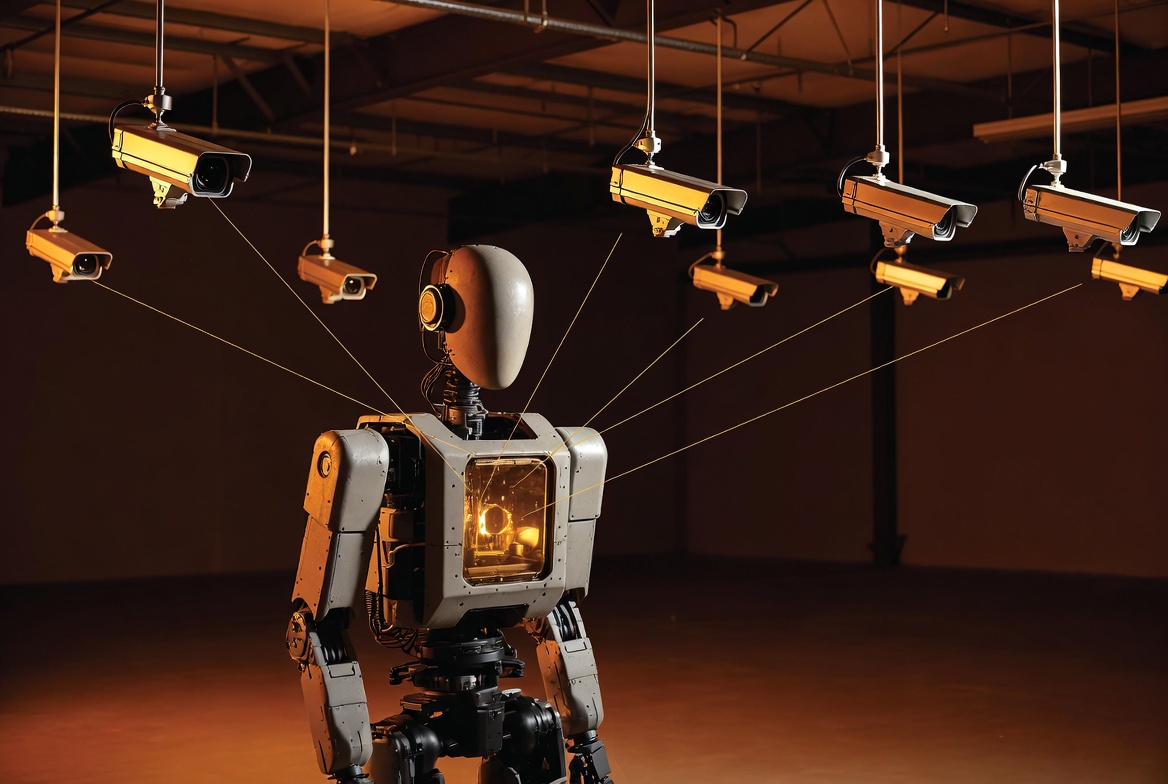
There is a version of this story that writes itself as good news. NVIDIA announced Halos for Robotics at Automate 2026 — a full-stack safety architecture designed for humanoid robots working alongside humans. Compute, sensors, operating system, and external cameras watching the robot from outside, all unified. Agility Robotics is integrating it into Digit for warehouse deployment. Robots get safer. Workers stay whole. Progress.
That version isn’t wrong. It’s just incomplete.
Halos is the third layer of the same platform. NVIDIA already supplies the chips most humanoid programmes run on. It built Isaac, the simulation environment where robots learn before they touch the physical world. Now it owns the safety stack — the certified layer that tells a robot when to stop, when to yield, when a human is too close. IGX Thor handles the compute. Halos OS manages the safety logic. External cameras provide outside-in monitoring the robot itself can’t fake or override. The architecture is coherent, well-specified, and almost certainly technically sound.
It is also, structurally, a lock-in play.
When a company like Agility integrates Halos into Digit, it isn’t just adopting a safety standard. It’s adopting NVIDIA’s definition of what safety means — codified in hardware, in firmware, in an OS the integrator doesn’t write and can’t easily replace. That definition will be audited. It will be cited in regulatory submissions. It will become, over time, the thing lawyers point to and insurers price against.
Standards set by infrastructure suppliers aren’t new. What’s new is how fast it’s happening. Humanoid robots working alongside humans in logistics is still early-stage deployment. The safety frameworks that will govern that deployment for the next decade are being written now, by the company that also sells the compute those frameworks run on.
None of this makes Halos bad engineering. The opposite problem — robots deployed in human environments without a rigorous safety architecture — is obviously worse. The autonomous behaviour of a 70kg robot with two arms and real grip strength near an unprotected human worker is exactly the kind of problem that needs a certified, auditable answer.
The question isn’t whether the architecture is sound. It’s who gets to say so.
NVIDIA’s answer, for now, is NVIDIA. Agility’s bet is that this is fine — that the benefits of a working safety stack outweigh the dependency it creates. That bet may well be right. It will be tested when the first serious incident happens, and every interested party checks what the Halos log says it was.
The humanoid is getting safer. The infrastructure it depends on is getting harder to leave.