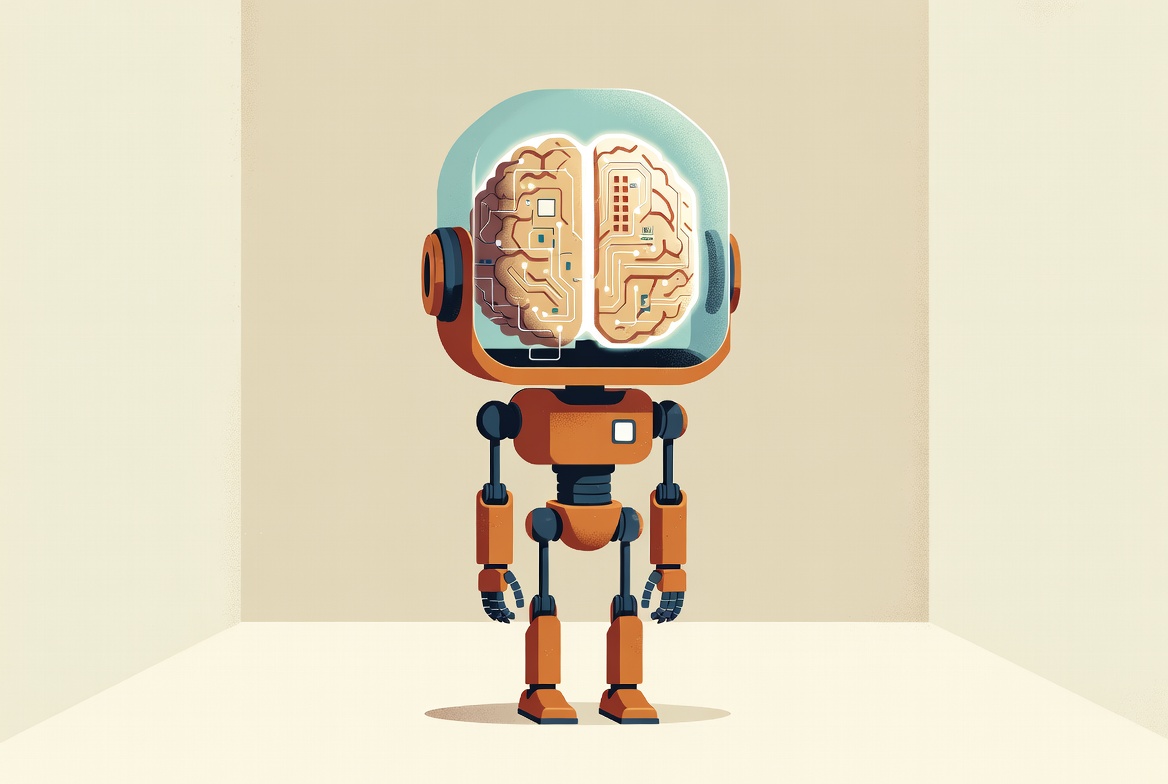
There is a number in the Booster T2 announcement doing an enormous amount of work. 2,070 TFLOPS. That is the compute the NVIDIA Thor chip delivers inside the Pro edition of Booster Robotics’ new flagship humanoid, launched on 13 July — and by Booster’s own account, it makes the T2 the most powerful onboard platform of any bipedal humanoid robot currently available. On the spec sheet, no walking robot on Earth is carrying a bigger brain.
That claim is almost certainly true. It is also almost beside the point.
Booster knows this, which is the interesting part. The company says so directly in its own launch copy: 2,070 TFLOPS is not the goal in itself. What is supposed to matter is that the compute lets perception, understanding, task planning and whole-body control run in a single real-time loop on the robot itself — the robot understanding its surroundings, forming a judgement, and turning that judgement into movement, without phoning home to a server. The pitch is not the number. The pitch is a robot that moves from being able to move to being able to work.
Notice the tense. Being able to work is a destination, not a report from the field.
The company that builds what everyone else builds on
This is the same company whose hardware quietly ran both sides of the first 11-a-side humanoid football match at RoboCup in Incheon last week — the milestone where the milestone was that every robot on the pitch was a Booster body, and most of them spent the match lying in the grass. Booster is very good at building the thing everyone else builds on. The T2 continues that: a bio-inspired body coordinating legs, waist, arms, head and hands, a proprietary Booster Studio pipeline for taking a policy from simulation to the real machine, an open developer ecosystem. It is, unmistakably, a serious platform from a serious company.
But the whole announcement is built around a chip, and a chip is an input. 2,070 TFLOPS tells you how much the robot can think. It tells you nothing about whether the robot can clear an unfamiliar table it has never seen, recover when the apple rolls the wrong way, or do the same task a hundred times without a human quietly resetting it between runs. Those are the questions the Trellis framework exists to ask, and none of them are answered by a compute figure. A bigger engine is not a destination reached; it is a bigger engine.
Why the industry always leads with silicon
There is a reason the industry keeps leading with silicon. Compute is measurable, impressive, and available for purchase — you can put “most powerful onboard platform” in a headline the day the chip is bolted in. Sustained, generalised, economically useful autonomy is none of those things. It is hard to measure, unglamorous to demonstrate, and cannot be bought from NVIDIA. So the announcement that can be made today is the one about the brain, and the announcement that would actually matter — the robot doing real work, continuously, in a place it wasn’t staged for — waits.
Two things are true at once. Booster has genuinely built the most capable onboard computing platform walking on two legs, and that is a real engineering achievement that raises the ceiling for what a humanoid could eventually do. And a raised ceiling is not a floor anyone is standing on yet: the T2’s case for itself rests on a number describing potential, in a launch that shows the capacity to work rather than the work.
The brain is the biggest anyone has put in a humanoid. We still haven’t been shown what it does with a bad day.